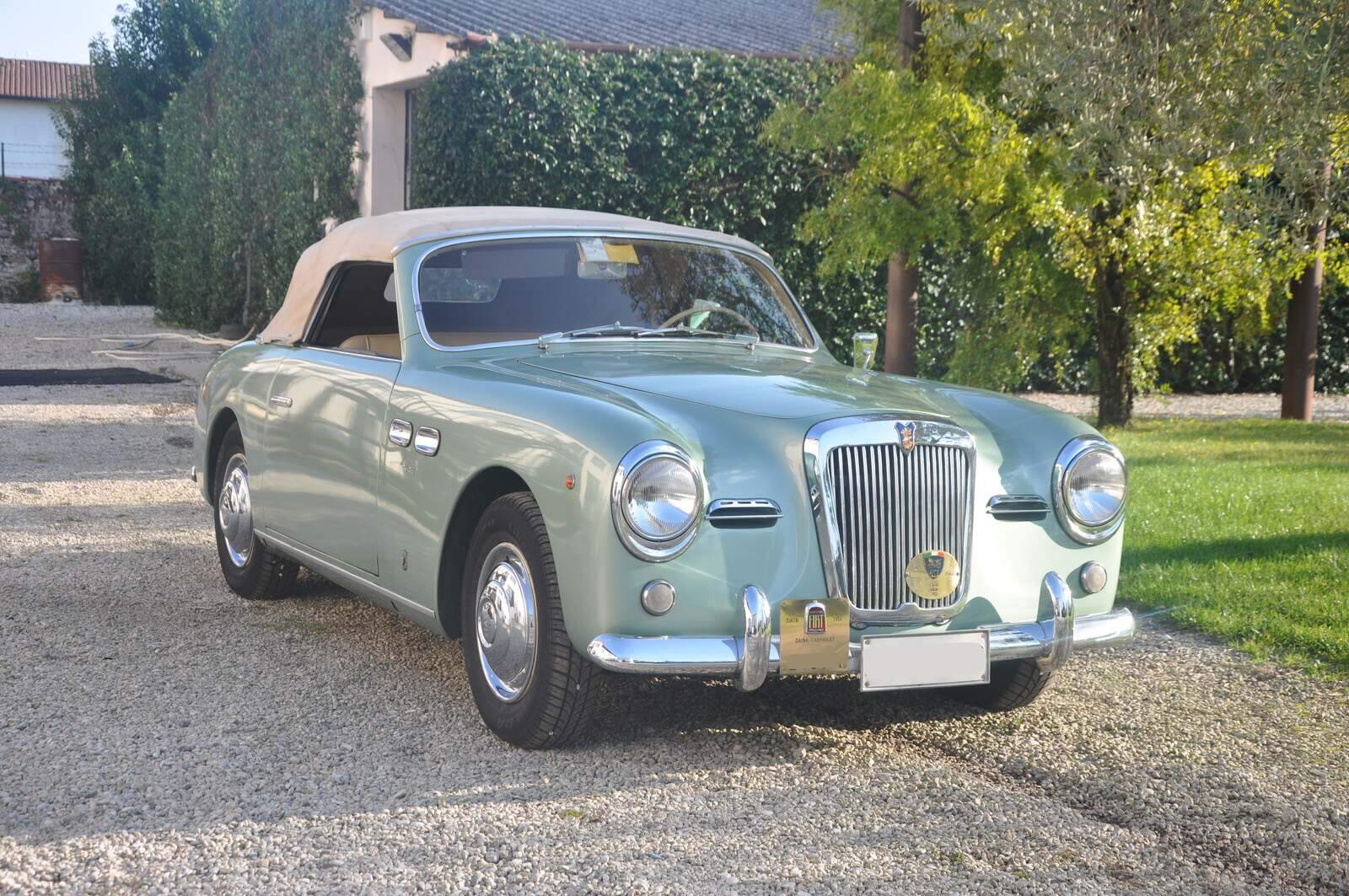
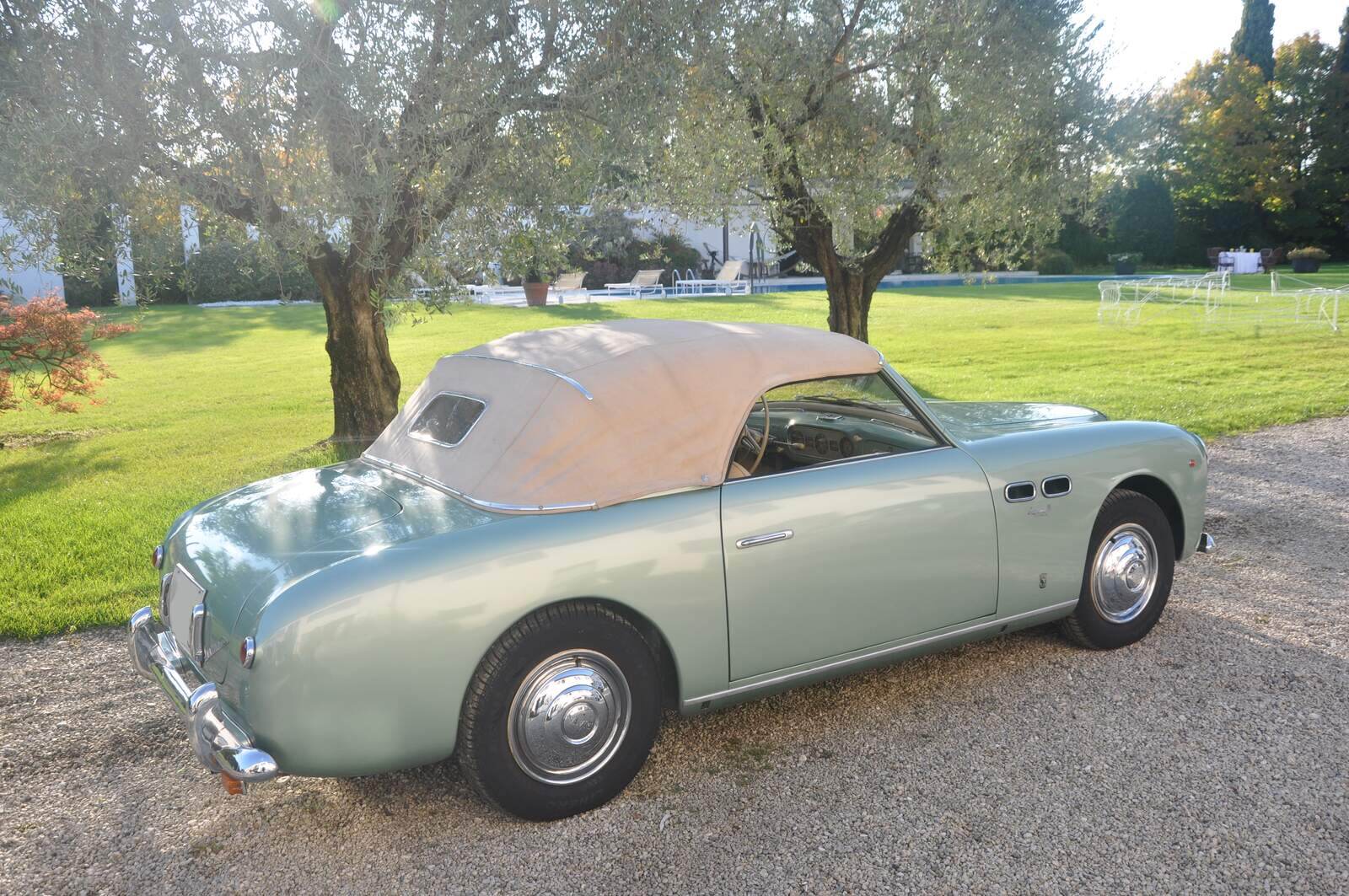
The 1952 SIATA Daina Convertibile is a rare example of the small-displacement Italian sports cars that flourished in the early post-war years. Built on Fiat mechanical foundations but extensively developed by SIATA, it combines elegant coachbuilt styling, lightweight construction and genuine competition-era character.
This specific car, chassis SL 0168, has been sold and is now part of the Giro Classico archive. It was restored in 2005–2006 by a specialist in Northern Italy, received ASI Targa Oro recognition and a FIAT Heritage certificate, and is documented by Giro Classico as retaining a highly original specification.
A rare Italian sports car with real period character
SIATA — Società Italiana Auto Trasformazioni Accessori — was founded in Turin in 1926 and built its reputation by modifying Fiat cars for greater performance. By the late 1940s and early 1950s, the company had evolved from tuning specialist to manufacturer, creating lightweight sports cars aimed at enthusiastic road drivers and amateur competitors.
The Daina was one of the models that defined this period.
Based on the Fiat 1400, it was offered as both Coupé and open-body versions, with coachwork produced principally by Stabilimenti Farina and later Bertone. This particular car is identified by Giro Classico as a Stabilimenti Farina-bodied example.
Its appeal lies precisely in that combination: familiar Fiat engineering underneath, but with far more specialised bodywork and mechanical development than a conventional production car.
Lightweight body and SIATA-tuned Fiat engine
The car’s body is largely constructed in aluminium, with the exception of the doors, helping keep weight low and giving the Daina the delicacy expected of a 1950s Italian barchetta-style sports car. It is finished in Light Green Metallic, the colour Giro Classico states corresponds to its original specification.
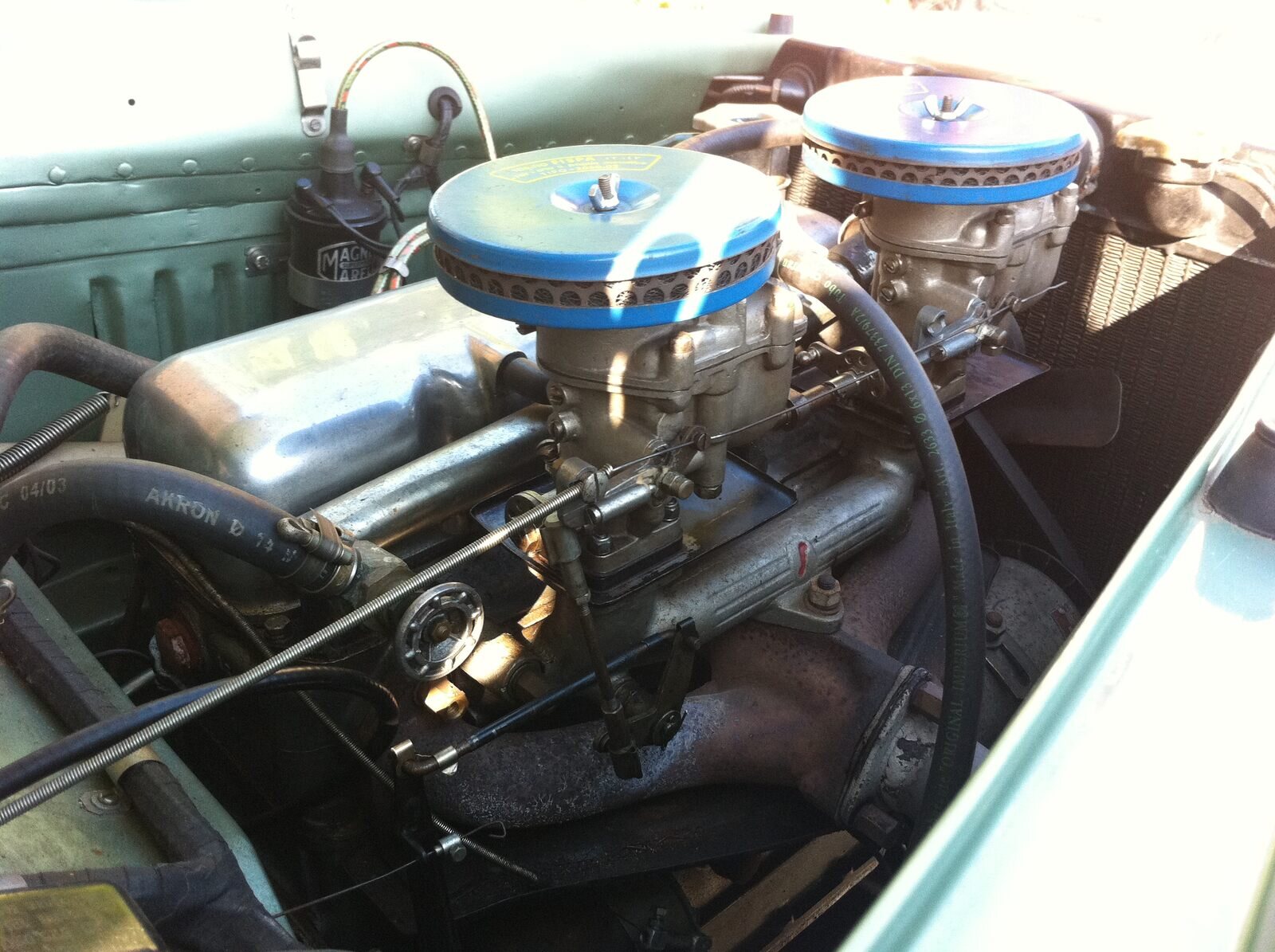
Power comes from a 1,400 cc Fiat four-cylinder engine modified by SIATA with:
- special cylinder head
- revised pistons
- twin Weber 32 carburettors
- approximately 53 kW output
The engine was completely rebuilt and the car was prepared for historic-event use.
This is a key part of what makes a genuine SIATA different from a standard Fiat derivative: the company’s expertise was not limited to styling, but extended deeply into engine tuning and performance.
Chassis SL 0168 and documented restoration
For a car this rare, the identity of the individual chassis matters enormously.
Giro Classico records this example as chassis SL 0168 and states that it underwent a complete restoration in 2005–2006, carried out according to the original specification and colour combination.
The finished car received:
- ASI Targa Oro
- FIAT Heritage certification
- recognition for originality
- preservation of rare badges
- rare chrome wheel studs
- high-quality aluminium and chrome finishing
Those details are particularly important because specialist Italian cars from this period are often restored several times during their lives, sometimes with modifications that gradually erase original features.
Here, the restoration history and certification add useful context for future collectors researching the car.
How rare is the SIATA Daina Convertibile?
Giro Classico’s original listing states that only seven examples are known to survive according to the registry.
Because survival figures for small coachbuilders can change as previously unknown cars reappear, this is best understood as a registry-based figure rather than an absolute worldwide census.
Even with that caveat, the point remains clear: the open Daina is an exceptionally scarce car.
Its rarity is enhanced by the fact that many Italian sports cars of this period were raced, modified or dismantled when their values were still low. Finding a surviving example with coherent identity, specialist restoration and certification is therefore considerably more difficult than simply finding a better-known production classic from the same era.
Competition heritage and the 1952 Sebring connection
SIATA was closely connected with motorsport, and the Daina itself has an important competition pedigree.
A Daina Cabriolet driven by Dick Irish and Bob Fergus won its class at the inaugural 1952 12 Hours of Sebring, finishing third overall ahead of several cars with much larger engines.
That does not mean chassis SL 0168 was the Sebring car, and the two should not be confused.
What the result demonstrates is the strength of the Daina concept: low weight, tuned Fiat mechanicals and efficient chassis design could produce genuine performance without relying on large displacement.
This competition connection helps explain why SIATA is increasingly appreciated today by collectors of Italian sports and racing cars.
Mille Miglia potential
Giro Classico’s archived listing describes this particular Daina as Mille Miglia eligible and notes that the engine was rebuilt and the car prepared with that use in mind.
For any future entry, however, eligibility should always be checked against the current Mille Miglia Register and regulations. The modern event is reserved for cars that participated in, or were historically eligible for, the original 1927–1957 editions, with admission assessed according to the organisers’ current criteria.
Read Giro Classico’s Mille Miglia 2026 guide
For many collectors, this event potential is one of the strongest reasons to seek cars such as a SIATA Daina: they are not simply static collection pieces, but machines created in the same culture of road racing and endurance events that defined post-war Italian motoring.
What matters when buying a SIATA Daina
A Daina should be evaluated differently from a higher-volume production car.
The most important areas are:
- chassis identity
- coachbuilder details
- body construction
- originality of aluminium panels
- engine specification
- SIATA modifications
- carburettors
- gearbox and drivetrain
- period colours
- badges and trim
- historic registrations
- restoration documentation
- certification and competition records
On a specialist car like this, historical continuity is often more important than cosmetic perfection.
A beautifully restored example may still require careful research if its chassis, body or mechanical specification has been altered over time. Conversely, a car with honest signs of use but strong provenance can be extremely significant.
Why the Daina is interesting to collectors today
The SIATA Daina sits in a particularly attractive part of the classic-car market.
It offers:
- rare Italian coachbuilding
- lightweight construction
- Fiat-based mechanical accessibility
- specialist SIATA engineering
- genuine 1950s competition heritage
- potential access to major historic events
- far greater rarity than most mainstream classics
It also belongs to the same broad world as Cisitalia, Stanguellini, Ermini and early OSCA: small Italian manufacturers that created highly distinctive cars by combining clever engineering with low weight and limited production.
For collectors who value historical depth and individuality more than badge recognition alone, that makes the Daina especially compelling.
This 1952 SIATA Daina Convertibile has been sold
This specific 1952 SIATA Daina Convertibile is no longer available and remains online as part of the Giro Classico handled-car archive.
The page should continue to attract valuable searches around:
- SIATA Daina for sale
- SIATA Daina value
- SIATA Daina Convertibile
- Mille Miglia eligible cars
- rare Italian sports cars
- Stabilimenti Farina
- SIATA buying guide
- historic Italian race cars
For a collector looking specifically for another Daina, private sourcing is likely to be far more effective than waiting for a suitable example to appear publicly.
Looking for a Mille Miglia-era sports car currently available?
For a buyer attracted primarily by 1950s sports-car character, open driving and historic-event potential, the strongest current Giro Classico alternative is the 1955 Porsche 356 Pre-A 1500 Speedster.
Discover the 1955 Porsche 356 Pre-A 1500 Speedster currently available at Giro Classico
The Porsche is very different from the SIATA in origin and engineering, but the collector intent is closely related.
Both offer:
- lightweight construction
- compact engines
- open-body driving
- strong 1950s identity
- major historic-event appeal
- international collector demand
The current Giro Classico Speedster has undergone a complete restoration finished in 2026 and is fitted with the correct Type 546/2 1,488 cc engine. It retains original doors and hoods, rare 16-inch wheels, Italian registration and ACI/CSAI certification, and is accompanied by more than 400 restoration photographs. It is currently listed at €450,000.
For someone specifically searching for another SIATA, this Porsche is not a substitute. But for a buyer looking for a high-level 1950s event car available now, it is the most relevant current route.
Looking specifically for another SIATA Daina?
Cars like this rarely trade through ordinary classified channels.
Giro Classico can assist with searches for:
- SIATA Daina Convertibile
- SIATA Daina Coupé
- SIATA 300 BC
- SIATA 208
- Cisitalia
- Stanguellini
- Ermini
- OSCA
- other Mille Miglia-era Italian sports cars
The process can include discreet off-market sourcing, archive and registry research, chassis verification, restoration assessment, event-eligibility checks, valuation, negotiation and specialist inspection.
Discover Giro Classico’s Collector Car Advisory service
For rare cars that change hands privately, Giro Classico can also manage confidential sourcing or brokerage through its international network.
Discover Giro Classico’s Private Brokerage service
For further information regarding sourcing a SIATA Daina, evaluating another rare Italian sports car, verifying Mille Miglia eligibility, or regarding the 1955 Porsche 356 Pre-A Speedster currently available, please contact us directly.
Because in the end, we never truly own these cars, we simply preserve them for the next generation.
Follow us on Instagram: @giro.classico