
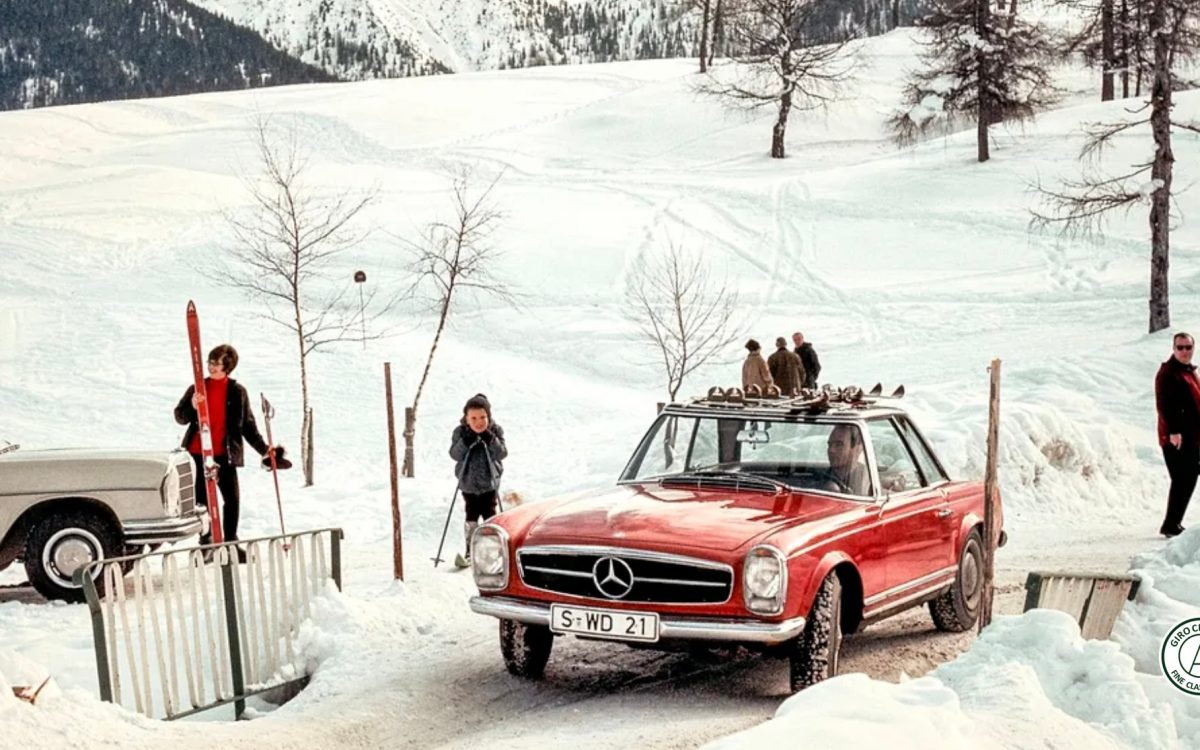
What is the Mercedes W113 Pagoda, and which model is the one to own? Launched at the Geneva Motor Show in 1963, the W113 stayed in production until 1971. It gave the world three roadsters: the 230 SL, the 250 SL and the 280 SL. All three share one of the most elegant silhouettes in automotive history. However, each has its own character and collector appeal. In this guide, Giro Classico traces the history of the Mercedes Pagoda and compares the three models. We also explain why many collectors see the rare 250 SL as the purest of the family.
The Birth of the Mercedes W113 Pagoda
The W113 arrived in 1963 as the Mercedes-Benz 230 SL. It replaced two icons at once: the sporting 300 SL and the more modest 190 SL. Mercedes set an ambitious brief. The company wanted a roadster with real performance, long-distance comfort and typical Stuttgart build quality. As a result, the car felt equally at home on a mountain pass and on the way to the opera.
Paul Bracq designed the clean, upright shape. Meanwhile, the engineering reflected the safety thinking of Béla Barényi, including a rigid passenger cell. The nickname comes from the most recognisable feature: the slightly concave hardtop. It dips at the centre like the roof of an Asian pagoda.
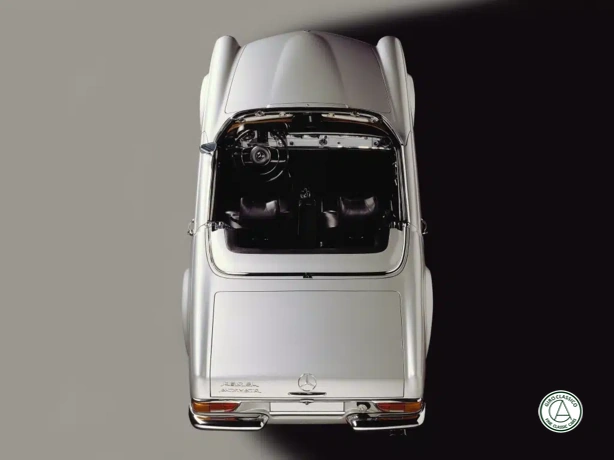
This was not only a styling gesture. The shape also allowed a taller roofline, easier entry and an airy cabin. In addition, the 230 SL proved itself in competition. It won the demanding Spa-Sofia-Liège rally in 1963.
Mercedes W113 Pagoda Models Explained: 230 SL, 250 SL and 280 SL
In total, 48,912 W113 cars were built between 1963 and 1971. Of these, 19,440 were sold in the United States. All three models use a six-cylinder engine with mechanical fuel injection. Even so, the details make each one distinct.
Mercedes 230 SL (1963 to 1967)
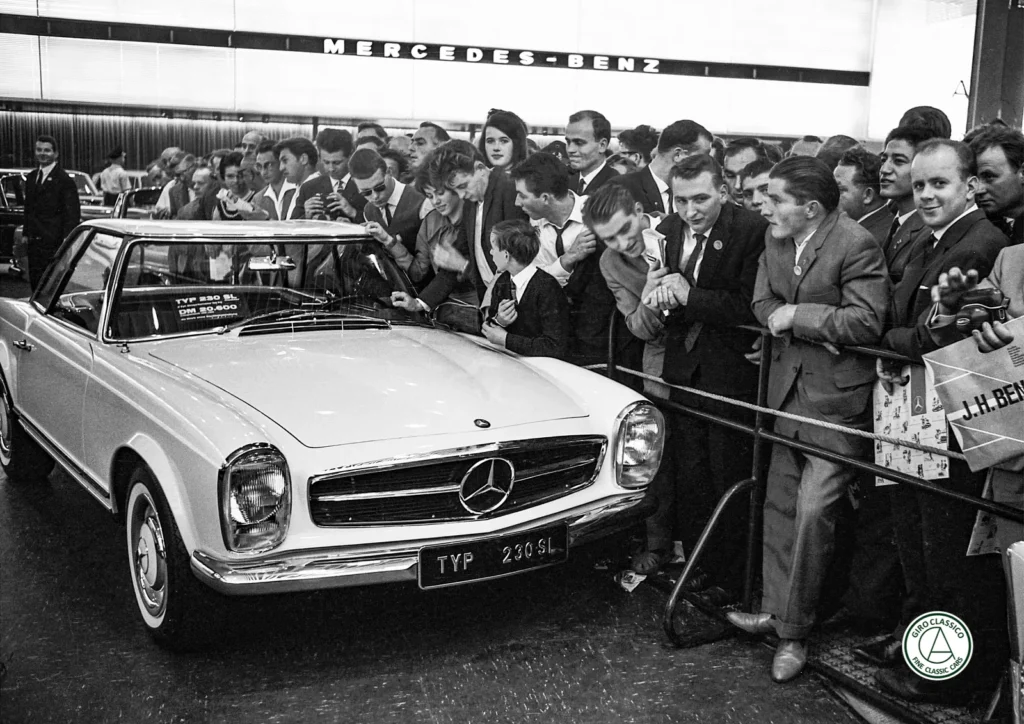
The original Pagoda has a 2.3-litre inline-six (2,306 cc) with around 150 hp. It has disc brakes at the front and drums at the rear. Some 19,831 examples were built. This is the lightest and most faithful expression of the original design. Cars with the rare ZF five-speed manual gearbox, available from 1966, are especially prized.
Mercedes 250 SL (1966 to 1968)
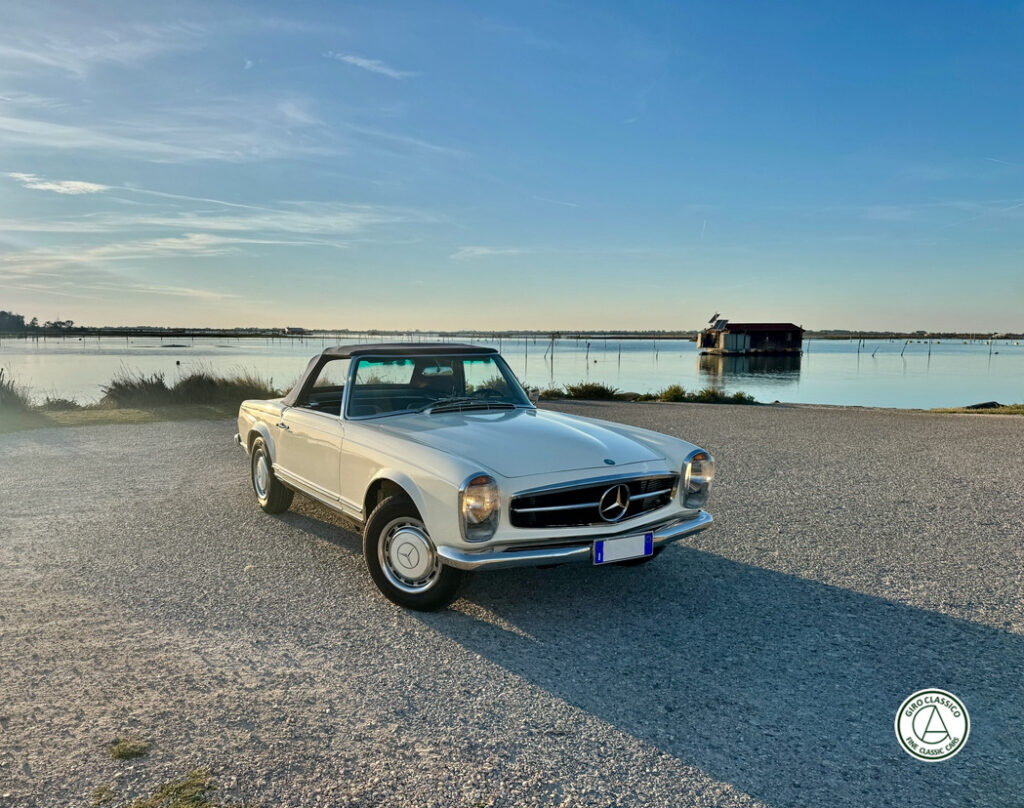
The 250 SL is the shortest-lived and rarest W113. Production ran from December 1966 to January 1968, and the car was presented at Geneva in 1967. Its 2.5-litre engine (2,496 cc) has a stronger seven-bearing crankshaft and more torque. It was also the first Pagoda with four-wheel disc brakes. A limited slip differential became available as an option. Only 5,196 cars were produced. In addition, early cars kept the chrome-trimmed interior of the 230 SL. The safety-oriented dashboard arrived only in 1968.
Mercedes 280 SL (1967 to 1971)
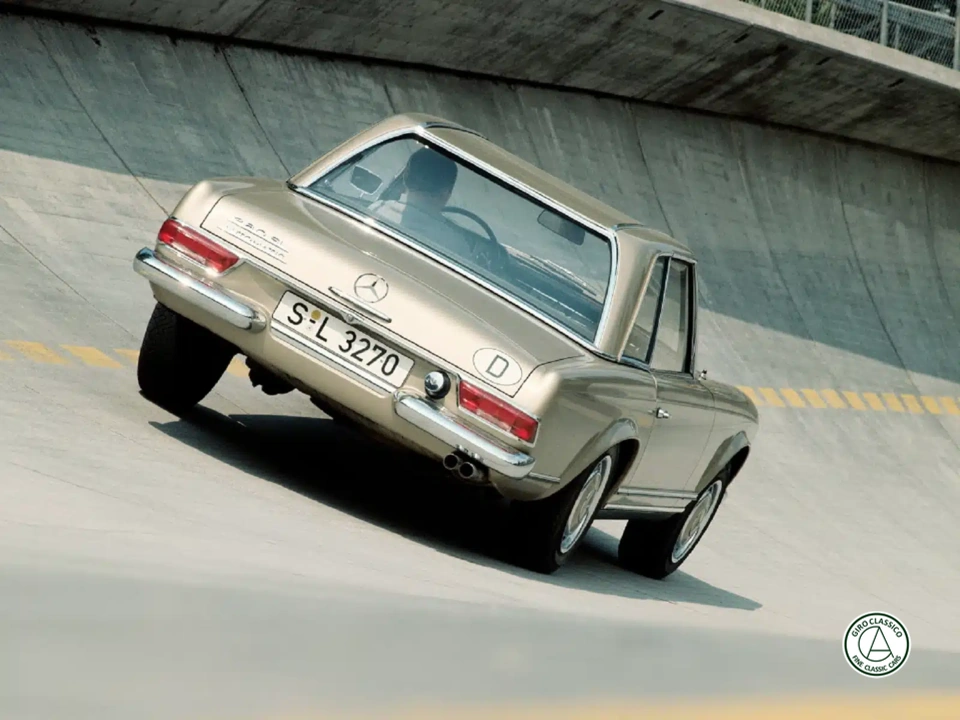
The 280 SL arrived at the end of 1967. Its 2,778 cc engine delivers around 170 hp. It is the most powerful and the most numerous Pagoda, with 23,885 cars built. That is nearly half of all W113 production. Most cars left the factory with an automatic gearbox. For this reason, it is often the first choice for buyers who want effortless grand touring.
230 SL vs 250 SL vs 280 SL at a Glance
Production: 19,831 cars for the 230 SL, 5,196 for the 250 SL and 23,885 for the 280 SL
Engines: 2.3, 2.5 and 2.8-litre inline-six units, all with mechanical fuel injection
Power: about 150 hp, about 150 hp and about 170 hp
Brakes: front discs and rear drums on the 230 SL, four-wheel discs on the 250 SL and 280 SL
Character: the lightest and most original, the rarest and most refined, and the strongest and most relaxed to drive
Mercedes Pagoda Market Positioning: Where the W113 Stands Today
Over the past decade, the Mercedes Pagoda has moved from enthusiast favourite to established blue-chip classic. It sits above the later R107 SL in desirability. Yet it sits well below the rarefied world of the 300 SL Gullwing and Roadster. For this reason, it is one of the most accessible entry points into serious SL ownership. International demand is consistent, and the best cars sell quickly.
At the top end, the rarity of the 250 SL shows. Well-documented cars with the ZF five-speed gearbox have reached six-figure results at major auctions. One example is $168,000 at RM Sotheby’s Amelia Island in 2023.
Within the family, each model has its own audience. Buyers who want ease of use often choose the 280 SL, the most widely traded. Purists who love lightness and a manual gearbox prefer the 230 SL. Meanwhile, the 250 SL holds a special place as the scarce middle model.
Yet the badge alone does not set the price. What matters most is:
Quality and depth of the restoration
Matching numbers for engine, gearbox and body
Original colour combination and correct specification
Documentation, such as the Mercedes-Benz Data Card, a photo record and ASI certification
Completeness, including the correct hardtop and soft top
A Pagoda restored properly and documented thoroughly commands a clear premium over a car repaired piece by piece.
Why the Mercedes 250 SL Is the Rarest and Purest Pagoda
Rarity comes first. Only 5,196 cars were built in little more than a year. That makes the 250 SL roughly one W113 in ten. Finding a correctly documented, matching-numbers example is genuinely difficult.
Purity follows. The 250 SL keeps the delicate details of the early cars, including the chrome-rich cabin. It also adds the stronger 2.5-litre engine and four-wheel disc brakes. As a result, it feels more reassuring and more satisfying at speed. It arrived before the heavier, more automatic-oriented character of the 280 SL took over.
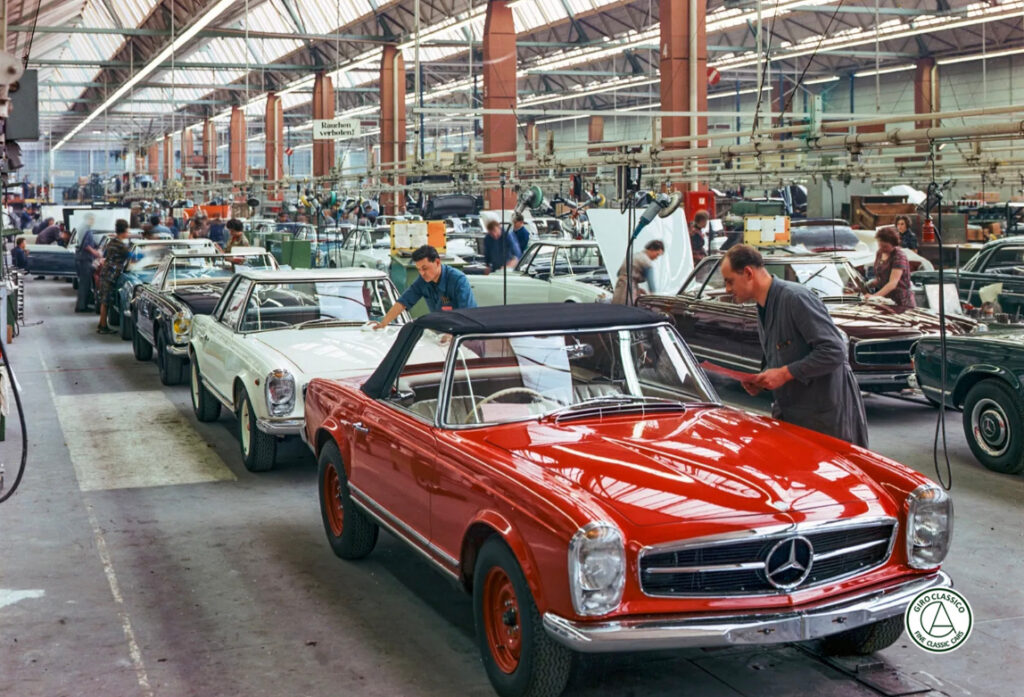
In other words, the 250 SL combines the elegance of the 230 SL with much of the usability of the 280 SL. Very few people ever had the chance to buy one. Collectors will always debate the best Pagoda, and the 280 SL has loyal followers. However, for those who value rarity, originality and balance, the 250 SL is hard to beat.
What to Check Before Buying a Mercedes Pagoda
Buying a Pagoda is deeply rewarding when done with method. Before committing, focus on these points:
Bodywork: sills, floors, rear wheel arches, boot floor and door bottoms, where hidden corrosion often appears
Numbers: engine, gearbox and body numbers matched against the Mercedes-Benz Data Card
Fuel injection: condition of the injection pump and injectors, and cold-starting behaviour
Running gear: rear axle, brakes and suspension, recently serviced
Interior and tops: correct trim and colours, plus a hardtop and soft top in good condition
Paperwork: photo record of the restoration, registration and ASI certification
For an independent opinion, read our guide to classic car pre-purchase inspection in Italy. Alternatively, discover our private classic car sourcing service across Italy and Europe.
Classic car pre-purchase inspection in Italy: https://www.giroclassico.com/classic-car-pre-purchase-inspection-in-italy/
Private classic car sourcing: https://www.giroclassico.com/private-classic-car-sourcing-in-italy-and-europe/
A 1967 Mercedes-Benz 250 SL Pagoda at Giro Classico
All of these qualities come together in the Pagoda now available from our collection in Vicenza. This car was built on 23 November 1967, in the closing months of 250 SL production. Its original combination of DB050 white over medium blue leather is intact, and the restoration is complete. Moreover, it comes with a photo book of more than 400 images, Mercedes-Benz Data Card documentation and ASI Gold Plate certification. A 12-month warranty valid throughout the EU is also included.
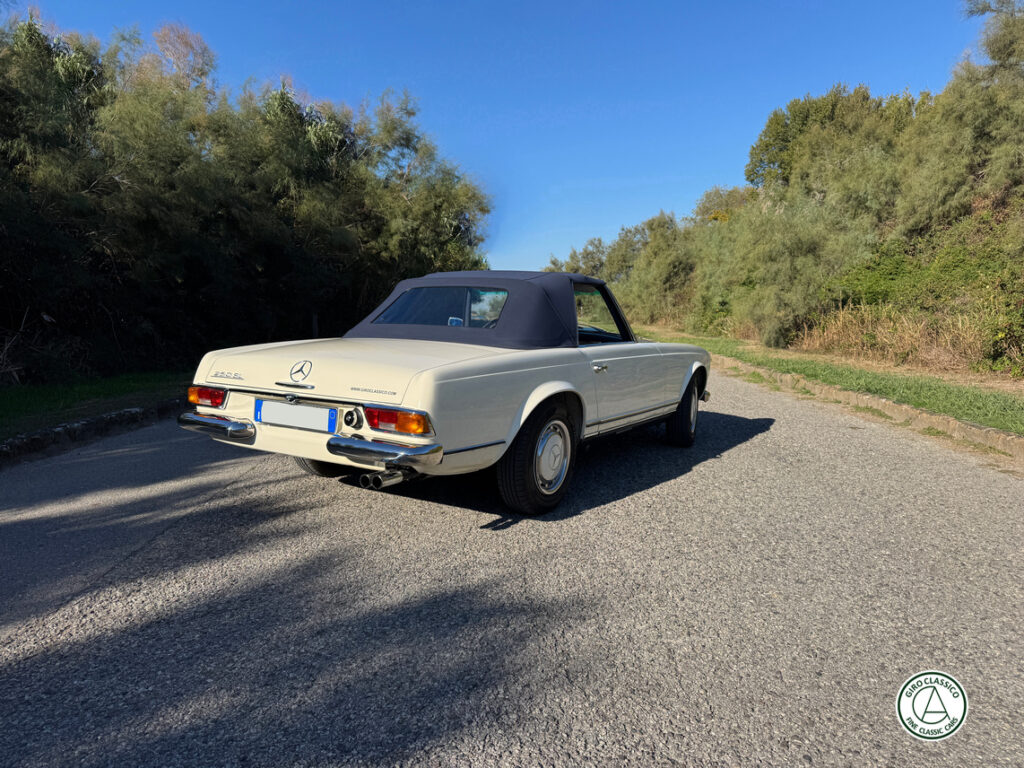
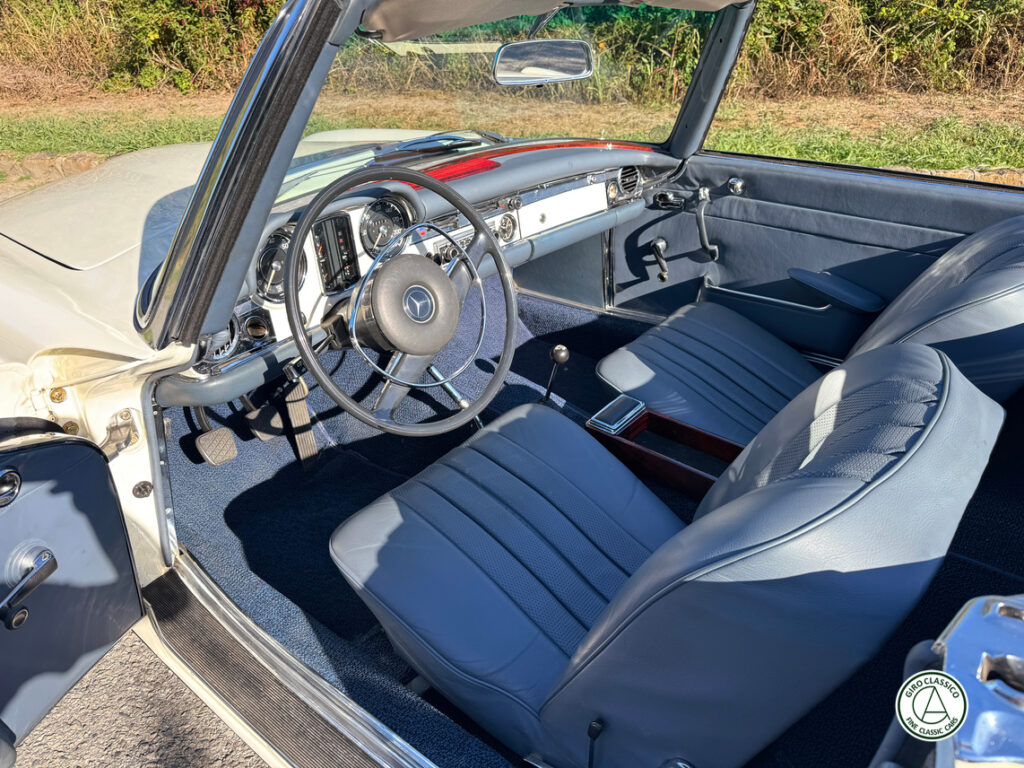
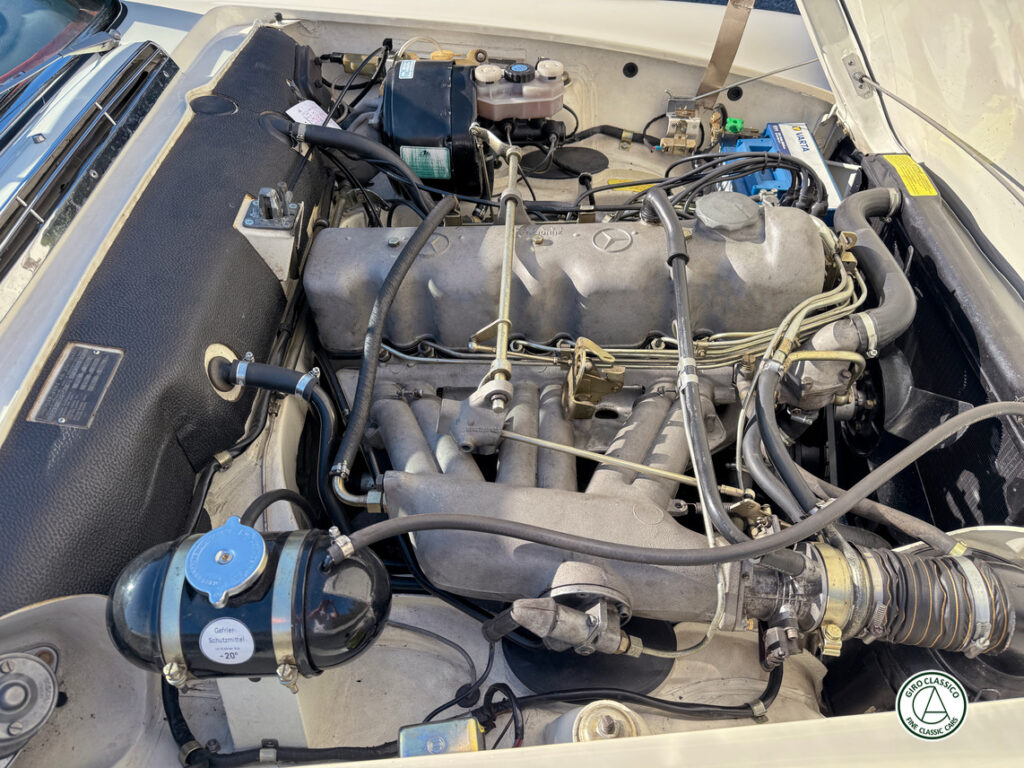
We know this car well. Giro Classico handled it in the past (see the earlier 1967 Mercedes 250 SL W113 page), and today it is available once again. If you are looking for a 1967 Mercedes-Benz 250 SL Pagoda for sale, we will gladly arrange a viewing in Vicenza. We can also provide a detailed photo presentation and domestic or international shipping.
See the earlier 1967 Mercedes 250 SL W113 page: https://www.giroclassico.com/vehicle/1967-mercedes-250-sl-w113/
1967 Mercedes-Benz 250 SL Pagoda for sale: https://www.giroclassico.com/vehicle/1967-mercedes-benz-250-sl-pagoda/
A Pagoda rewards those who choose carefully: the right car, properly restored and fully documented.
