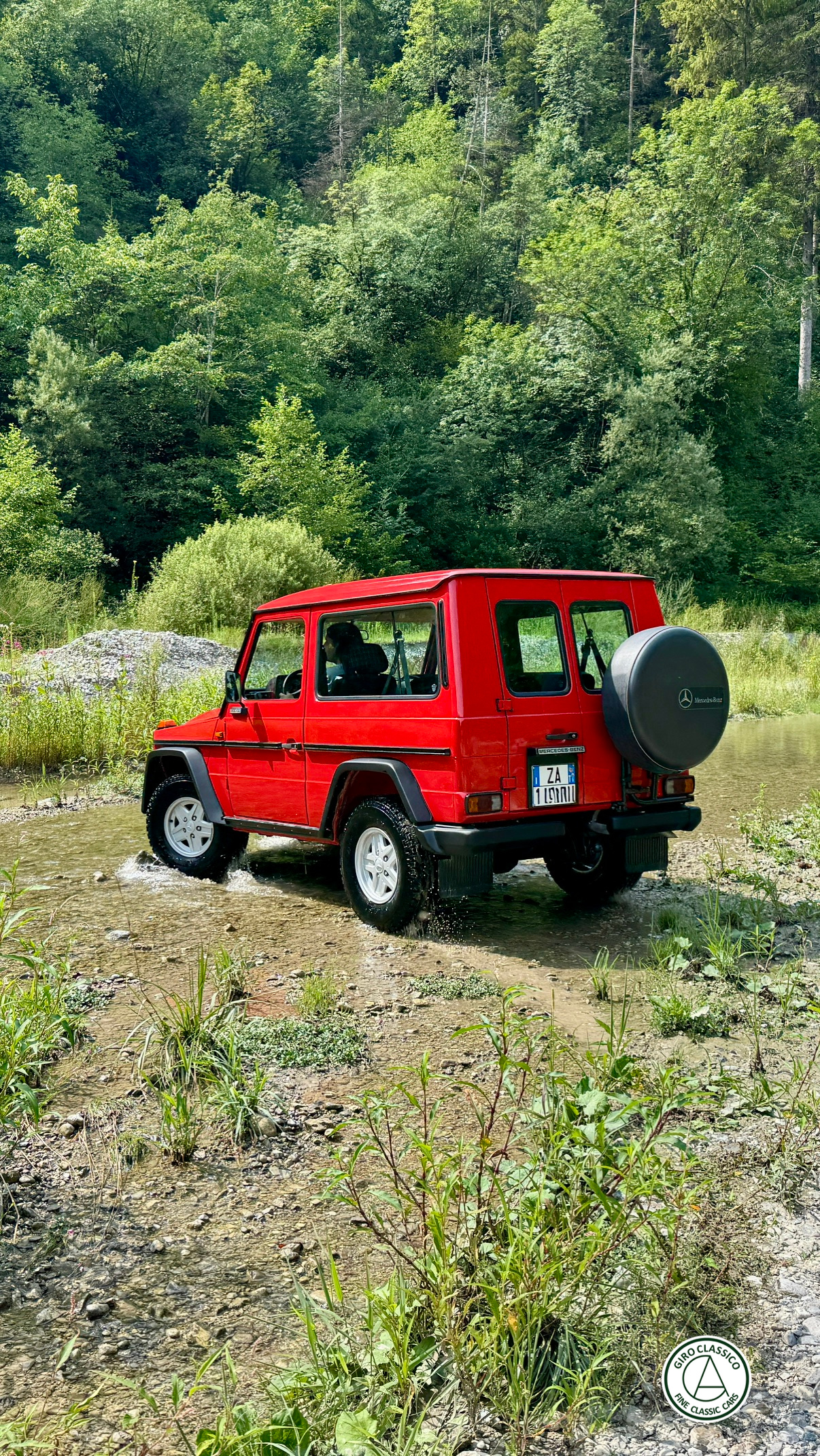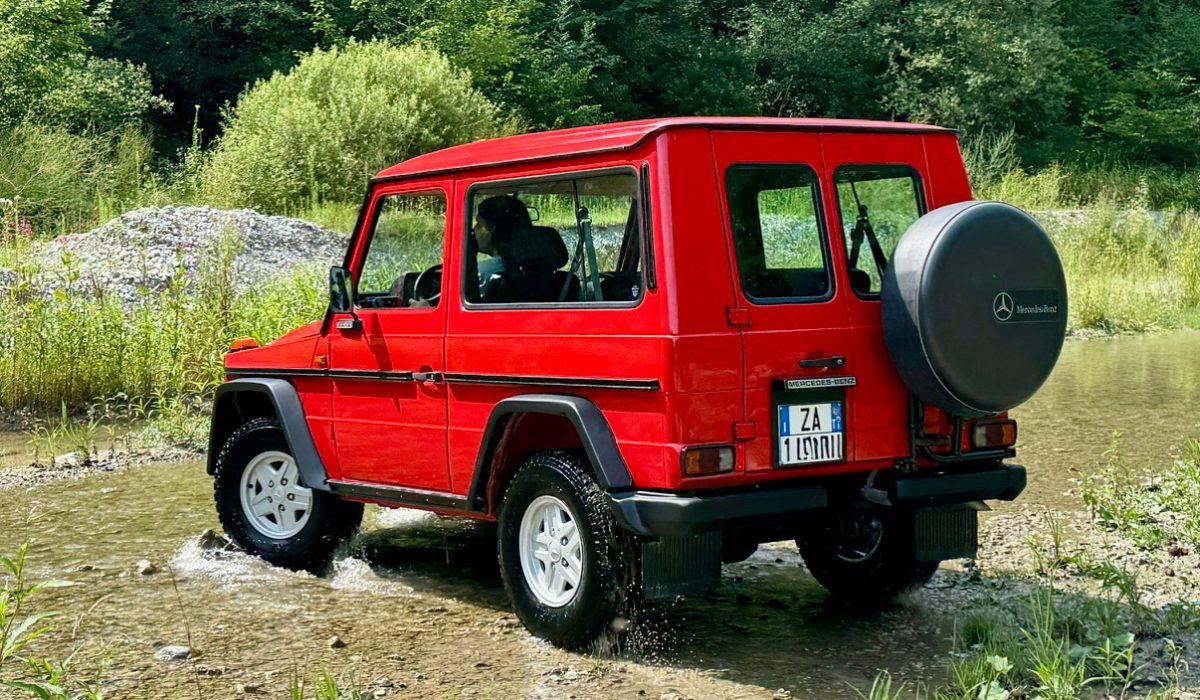
The 1983 Mercedes-Benz 300 GD W460 belongs to the earliest and most authentic chapter of the G-Class story. Long before the G-Wagen became a luxury icon, the original W460 was engineered as a serious off-road vehicle: robust, mechanically simple and designed to operate reliably in difficult conditions.
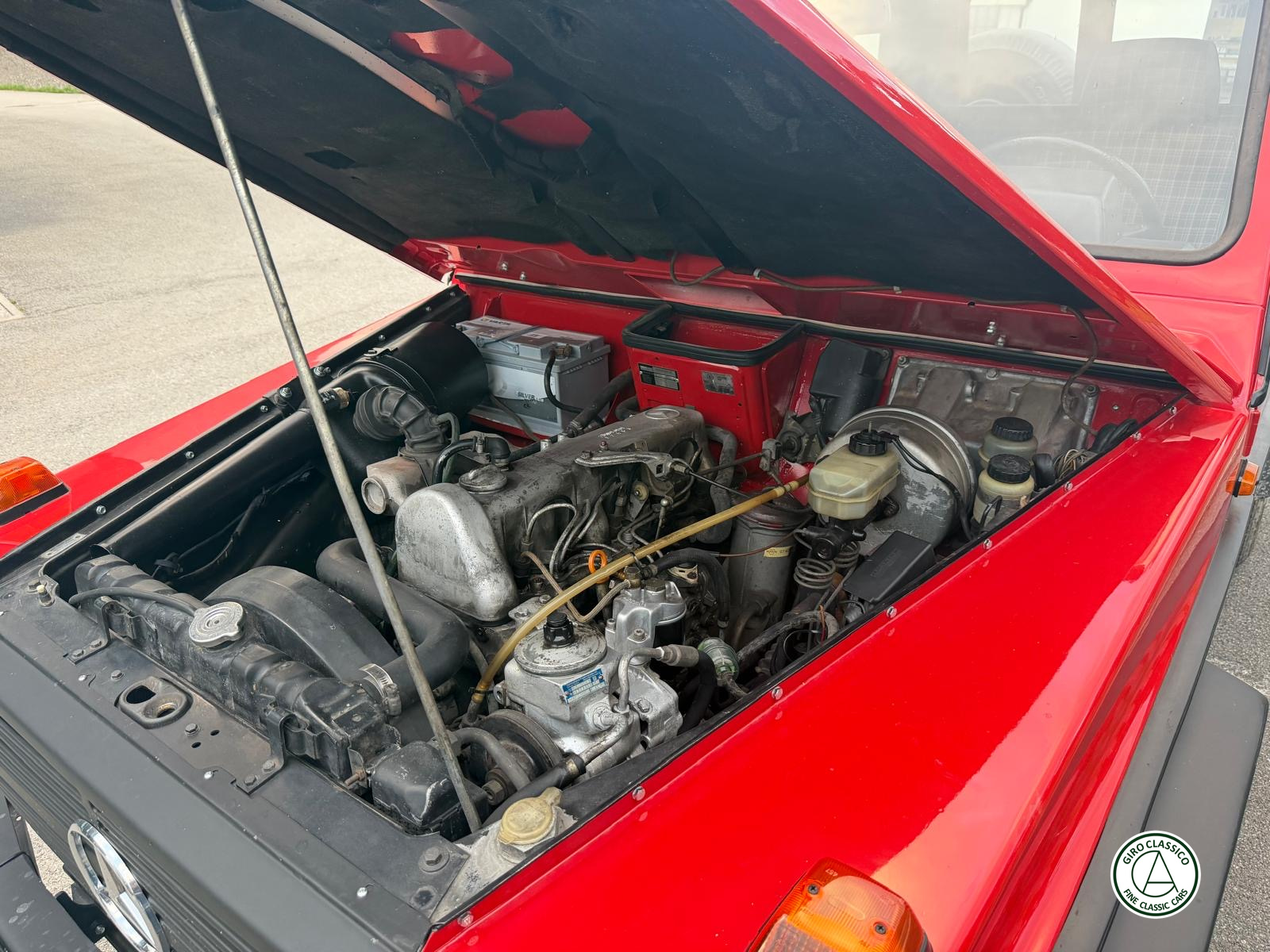
Powered by Mercedes-Benz’s durable 3.0-litre diesel engine, this Italian-delivered 300 GD combines the traditional ladder-frame chassis, rigid axles and selectable four-wheel drive with a particularly purposeful factory specification.
This specific example has recently been sold by Giro Classico. Before the sale, it underwent substantial cosmetic and mechanical work, including a body-off repaint with the body removed from the chassis and an important general service.
An early 300 GD from the original W460 generation
Mercedes-Benz introduced the G-model in 1979 following its development with Steyr-Daimler-Puch in Austria.
The original W460 was not conceived as a luxury SUV. Its priorities were considerably more practical:
- structural strength
- off-road traction
- mechanical durability
- ease of maintenance
- excellent visibility
- genuine load-carrying ability
The 300 GD represented the larger diesel option within the early range and became particularly respected for reliability and long-distance durability.
Its naturally aspirated 3.0-litre diesel is very different in character from later high-performance G-Class engines. Performance is secondary to torque, robustness and the ability to operate reliably over high mileages.
That simplicity is increasingly part of the model’s appeal today.
Delivered new to Italy in May 1983
The factory information available for this vehicle records:
Model: Mercedes-Benz 300 GD
Generation: W460
Order location: Italy
Delivery date: 9 May 1983
Factory paint code: 3002
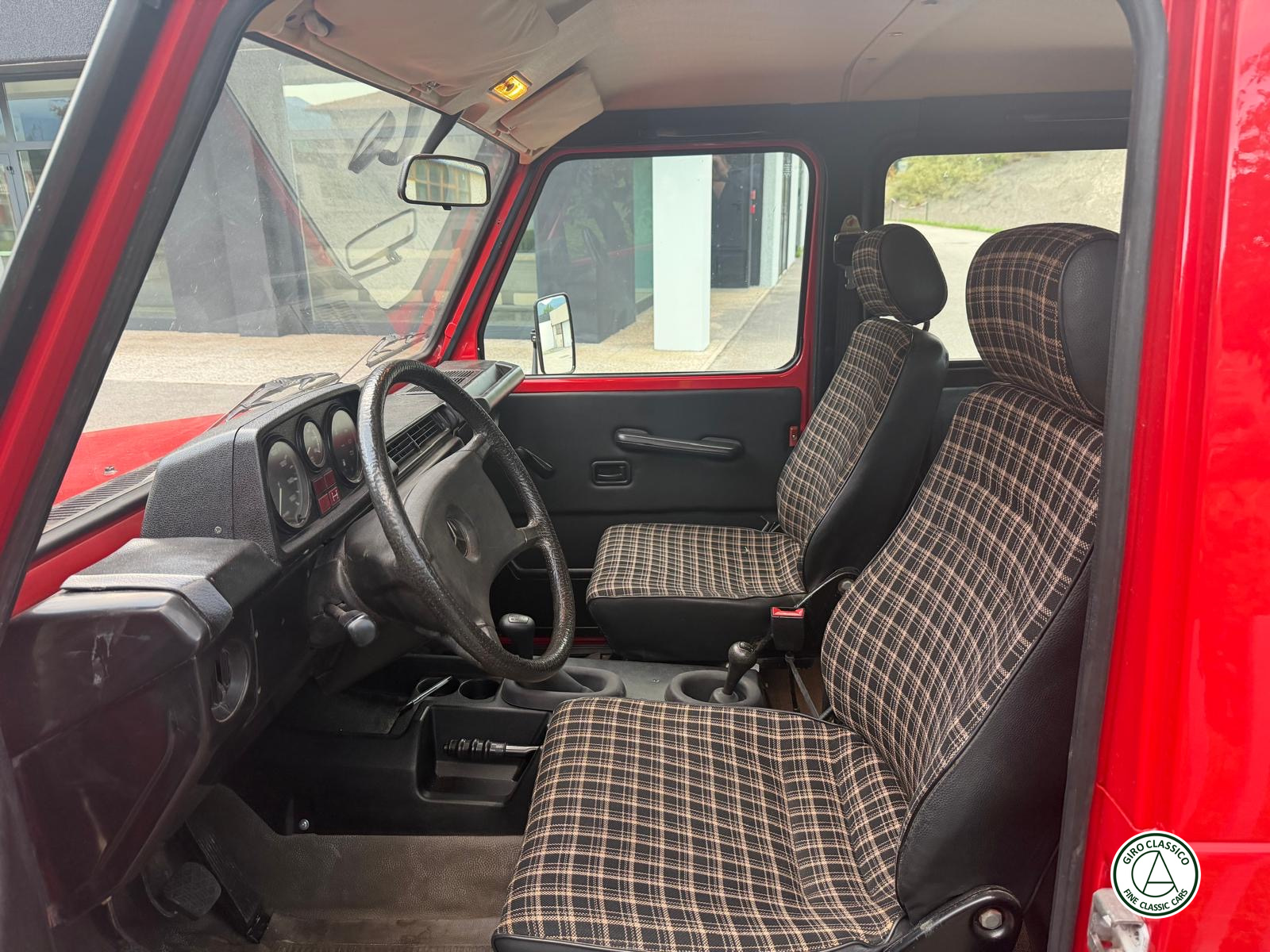
Interior: Black
Its equipment specification is especially interesting because it reflects the original working character of the G-Wagen rather than the luxury positioning of later generations.
Recorded factory options include:
- A70 – front axle differential lock
- A71 – rear axle differential lock
- C70 – two-piece rear bumper
- D67 – half-height load partition with protective grille
- F66 – lockable glove compartment
- G75 – engine-speed compensation
- H20 – heat-insulating glass
- J33 – clock
- L62 – reading light
- L66 – additional interior light above the rear doors
- P39 – widened wheel arches for wide tyres
- Q58 – front towing hook
- R78 – alloy wheels for wide tyres
- S30 – driver headrest
- S32 – passenger headrest
- S96 – rear bench seat deletion
- V18 – black interior
- V34 – padded grab handle and dashboard
- V47 – storage tray with heated-air provision
- W51 – twin rear doors with windows
- Y44 – warning triangle
The combination gives this 300 GD an unusually functional and coherent specification.
Front and rear differential locks
Two of the most important factory options are A70 and A71, specifying locking differentials for both the front and rear axles.
This is a particularly desirable feature on an early W460.
Together with selectable four-wheel drive and rigid axles, the differential locks allow torque to be distributed effectively when individual wheels begin to lose traction.
For collectors today, these options are significant because they reinforce the original purpose of the G-Class: this was a vehicle engineered to work off-road, not merely to resemble one.
A genuinely utilitarian specification
Several other options tell the same story.
The rear bench-seat deletion, half-height load partition and twin rear doors suggest a vehicle originally configured with cargo-carrying ability in mind.
At the same time, wider arches, alloy wheels and wider tyres gave the car a more substantial road presence without moving away from its practical roots.
This specification makes the car particularly attractive from a collector perspective because it has a clear identity. Rather than having been converted later to imitate a modern G-Class, it reflects what buyers could genuinely order in the early 1980s.
Recently repainted with the body removed from the chassis
Before its sale, this Mercedes-Benz 300 GD underwent an important cosmetic refurbishment.
The body was removed from the chassis prior to repainting, allowing the work to be approached much more comprehensively than with a conventional exterior respray.
On an early G-Wagen this matters because many of the most important areas are difficult to inspect or prepare properly with the body assembled.
Removing the body provides far better access to:
- body mounting points
- chassis surfaces
- floor sections
- lower body structures
- wheel arches
- hidden corrosion-prone areas
For a W460, the quality of the work below the paint is considerably more important than cosmetic gloss alone.
The factory data also records paint code 3002, providing a useful reference when assessing the vehicle’s original specification.
Important general mechanical service
The cosmetic work was accompanied by an important general service before the vehicle was sold.
On an early 300 GD, this type of mechanical preparation is particularly valuable. These vehicles are extremely durable, but age still affects components throughout the drivetrain and chassis.
A properly maintained W460 should receive attention to:
- engine fluids and filters
- cooling system
- fuel system
- gearbox
- transfer case
- front and rear differentials
- differential-lock operation
- driveshafts and universal joints
- steering
- wheel bearings
- brakes
- suspension bushes
- electrical system
The result should be a G-Wagen that retains its rugged original character while remaining pleasant and dependable to use.
The 3.0-litre diesel character
The 300 GD was never designed around outright speed.
Its appeal is instead found in the qualities that made early Mercedes-Benz diesels famous:
- strong low-speed torque
- mechanical simplicity
- durability
- long service life
- relaxed low-speed off-road control
That character is perfectly suited to the W460 chassis.
Where later G-Class models became progressively more powerful and sophisticated, an early 300 GD provides a much more direct experience. The driver interacts with the vehicle mechanically rather than electronically, making it especially appealing to enthusiasts who value authenticity.
1983 and the G-Wagen’s growing reputation
The year 1983 is important in G-Class history.
That year, Jacky Ickx and Claude Brasseur won the Paris-Dakar Rally in a Mercedes-Benz 280 GE, providing one of the most famous demonstrations of the fundamental strength of the early G-Wagen platform.
This specific 300 GD has no claimed connection with the Dakar car, but the result illustrates the environment in which early W460s earned their reputation.
These were vehicles designed during an era when robustness, suspension travel, traction and serviceability mattered more than luxury features or headline power figures.
Why early W460 G-Wagens are becoming collectible
For many years, early G-Class models were simply used as intended.
They worked on farms, estates, construction sites, in mountainous regions and for government or military services. Because of that, good original examples are becoming increasingly difficult to find.
Collectors now appreciate the W460 for exactly the qualities that once made it purely utilitarian:
- original box-shaped body
- separate ladder chassis
- rigid axles
- selectable four-wheel drive
- manually controlled differential locks
- simple cabin
- minimal electronics
- excellent visibility
- extremely durable mechanical engineering
It represents the G-Class before the G-Class became a luxury vehicle.
That distinction is becoming increasingly important as later G-Wagens continue to move further into the premium and performance market.
Why factory specification matters
Not every early W460 has the same collector appeal.
Cars with a documented and coherent factory configuration can be considerably more interesting than examples modified extensively during later ownership.
On this 300 GD, particularly important elements include:
- front differential lock
- rear differential lock
- widened arches
- factory alloy wheels
- black interior
- cargo partition
- deleted rear bench
- twin rear doors
- Italian delivery
- documented factory paint code
These details give the car an identifiable historical specification and should ideally be preserved rather than modernised.
What to inspect before buying a Mercedes-Benz 300 GD W460
The rugged appearance of a G-Wagen can sometimes disguise expensive structural problems.
A specialist inspection should begin with the chassis and body rather than the engine.
Key areas include:
- ladder frame
- body mounts
- floors
- sills
- wheel arches
- windscreen surround
- lower doors
- rear body structure
- previous welding
- corrosion beneath seals and trim
- suspension mounting points
Mechanically, attention should then turn to:
- engine condition
- gearbox
- transfer case
- differential locks
- axle seals
- driveshafts
- steering play
- wheel bearings
- brakes
- cooling system
On a recently repainted vehicle, photographs documenting the body-off work are especially valuable because they reveal what existed beneath the final finish.
W460 versus W463
Understanding the difference between the W460 and later W463 is essential when buying a classic G-Class.
The W460 represents the original utilitarian concept. It offers straightforward mechanical four-wheel drive, simple interiors and little electronic assistance.
The W463, introduced later, moved the G-Class toward a substantially more luxurious market with permanent four-wheel drive, greater refinement and increasingly sophisticated interior equipment.
For a collector interested in the original engineering philosophy of the G-Wagen, the W460 therefore offers something the later cars cannot fully reproduce.
The 300 GD is one of the most recognisable diesel expressions of that original formula.
This 1983 Mercedes-Benz 300 GD has been sold
This particular 1983 Mercedes-Benz 300 GD W460 is no longer available, having recently been sold by Giro Classico.
Keeping the page online remains useful for collectors researching:
- Mercedes 300 GD for sale
- Mercedes-Benz 300 GD W460
- classic G-Wagen
- vintage Mercedes Geländewagen
- early G-Class
- Mercedes W460 value
- classic diesel G-Wagen
- restored Mercedes G-Class
It also demonstrates Giro Classico’s ability to identify, prepare and sell collectible vehicles beyond traditional sports and GT cars.
Looking for another early Mercedes-Benz G-Wagen?
The best W460s are becoming increasingly difficult to find, particularly when the search requires an attractive factory specification, limited corrosion and documented restoration work.
Giro Classico can assist with the search for:
- Mercedes-Benz 300 GD
- Mercedes-Benz 280 GE
- Mercedes-Benz 230 GE
- Mercedes-Benz 240 GD
- short-wheelbase W460
- long-wheelbase W460
- early W463 models
- original or comprehensively restored G-Wagens
A targeted acquisition can include factory data-card research, chassis and body inspection, corrosion assessment, drivetrain verification, market valuation, negotiation and international logistics.
Discover Giro Classico’s Collector Car Advisory service
For vehicles offered away from the public market, Giro Classico can also manage discreet sourcing, acquisition and resale through its private brokerage network.
Discover Giro Classico’s Private Brokerage service
For further information regarding sourcing a Mercedes-Benz 300 GD W460, evaluating a restored early G-Wagen or locating a particularly desirable factory specification, please contact us directly.
Because in the end, we never truly own these cars, we simply preserve them for the next generation.
Follow us on Instagram: @giro.classico