
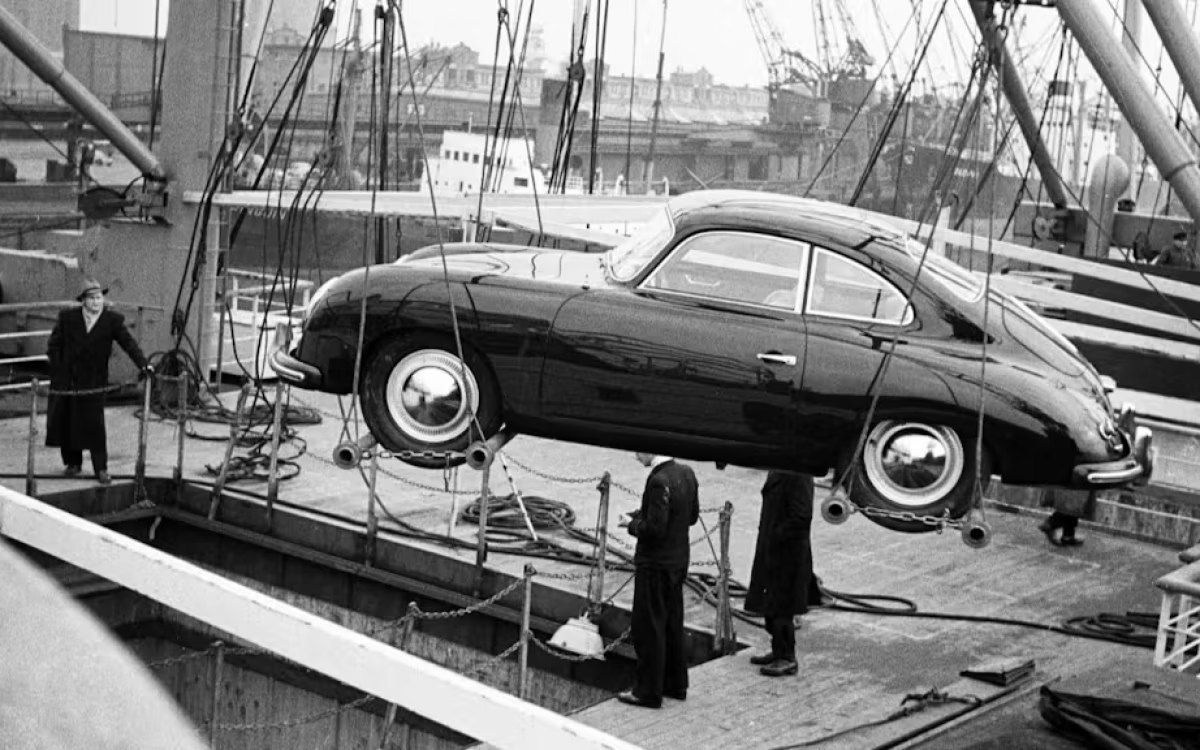
The 1955 Porsche 356 represents one of the most important turning points in Porsche history. More than a charming classic sports car, it marked the moment when the first 356 generation reached true technical maturity. Above all, it became the model that helped Porsche establish its presence in the North American classic car market. Porsche Classic
To fully understand its importance, it is worth looking back at the development of the Porsche 356 from 1948 to 1955, exploring its engine evolution, engineering philosophy and the historical context that made this model so significant.


From the 1948 Origins to Series Production
The story began in 1948 in Gmünd, Austria, when Ferdinand Porsche and his son Ferry Porsche set out to build a lightweight sports car using Volkswagen-based mechanical components.
The concept was simple, yet revolutionary: low weight, an air-cooled rear-mounted boxer engine and outstanding dynamic efficiency.
The earliest Porsche 356 models were hand-built with aluminium bodies. Their 1.1-litre engine produced around 40 hp, which may sound modest today. However, thanks to a weight of less than 600 kg, performance was remarkably lively for the period.
From the beginning, lightness became one of Porsche’s defining engineering principles.
In 1950, production moved to Zuffenhausen, Germany. With the transition to steel bodywork and more structured manufacturing, the Porsche 356 entered a new phase of development, today known as the Pre-A series.
Porsche 356 Engine Evolution: 1950 to 1955
Between 1950 and 1955, the Porsche 356 range expanded steadily. The early 1100 and 1300 versions offered power outputs between approximately 40 and 44 hp. Later, the 1500 version introduced more usable performance, with around 55 hp and improved flexibility.
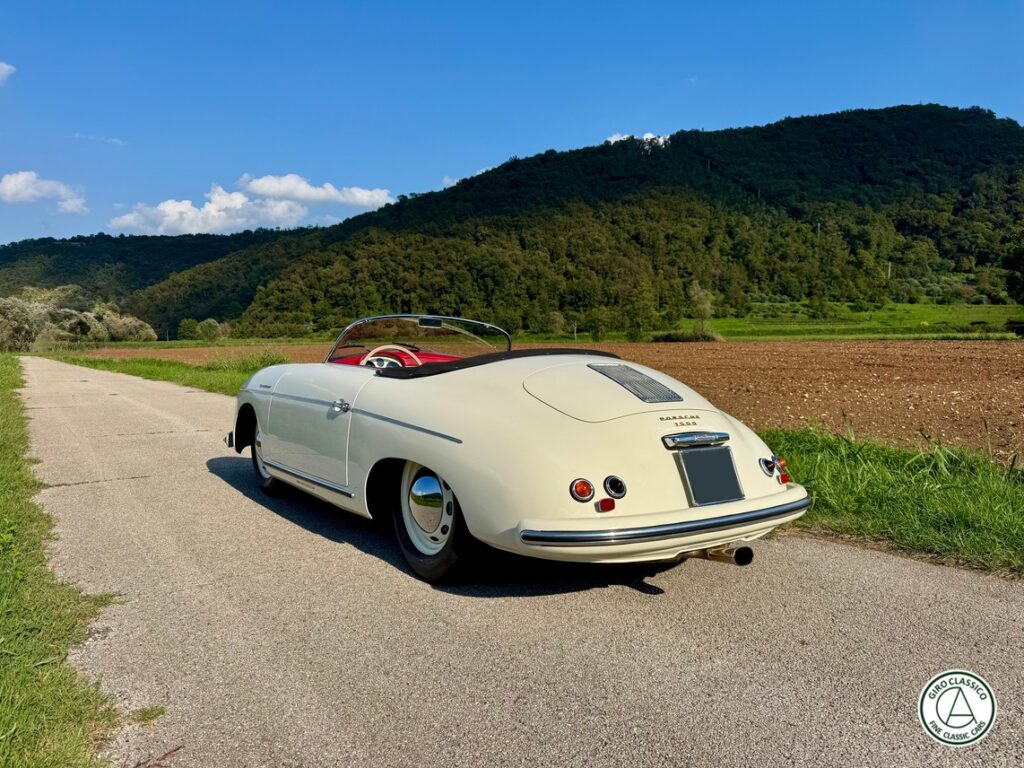
At the same time, Porsche developed more powerful variants, including the Porsche 356 1500 Super, capable of producing up to 70 hp.
This evolution was no coincidence. Demand for higher performance was growing, while motorsport was becoming essential to Porsche’s brand identity. Racing success in Europe and the United States helped strengthen the international reputation of the Porsche 356 and positioned the brand as a serious manufacturer of lightweight sports cars.
The 1955 Porsche 356: A Mature Classic Sports Car
By 1955, the Porsche 356 Pre-A had reached a level of refinement that made it especially well balanced. It was no longer an experimental sports car, but a mature, reliable and usable model suitable even for regular road driving.

Key improvements of the 1955 Porsche 356 included:
- improved braking system
- more stable suspension setup
- better cabin ventilation
- refined aerodynamic details
- more evolved styling features
The available engines included:
1500
- 1,488 cc
- approximately 55 hp
1500 Super
- approximately 70 hp
1600, late Pre-A evolution
- up to approximately 75 hp
In its most powerful versions, the 1955 Porsche 356 could exceed 170 km/h, making it one of the most compelling European sports cars of its class.
The Porsche 356 and the North American Market
One of the most important aspects of the 1955 Porsche 356 is its role in Porsche’s success in the United States.
During this period, importer Max Hoffman understood the commercial potential of Porsche’s lightweight sports car overseas. Thanks to his influence and market vision, Porsche began exporting a growing number of 356 models to North America.
American drivers appreciated several qualities:
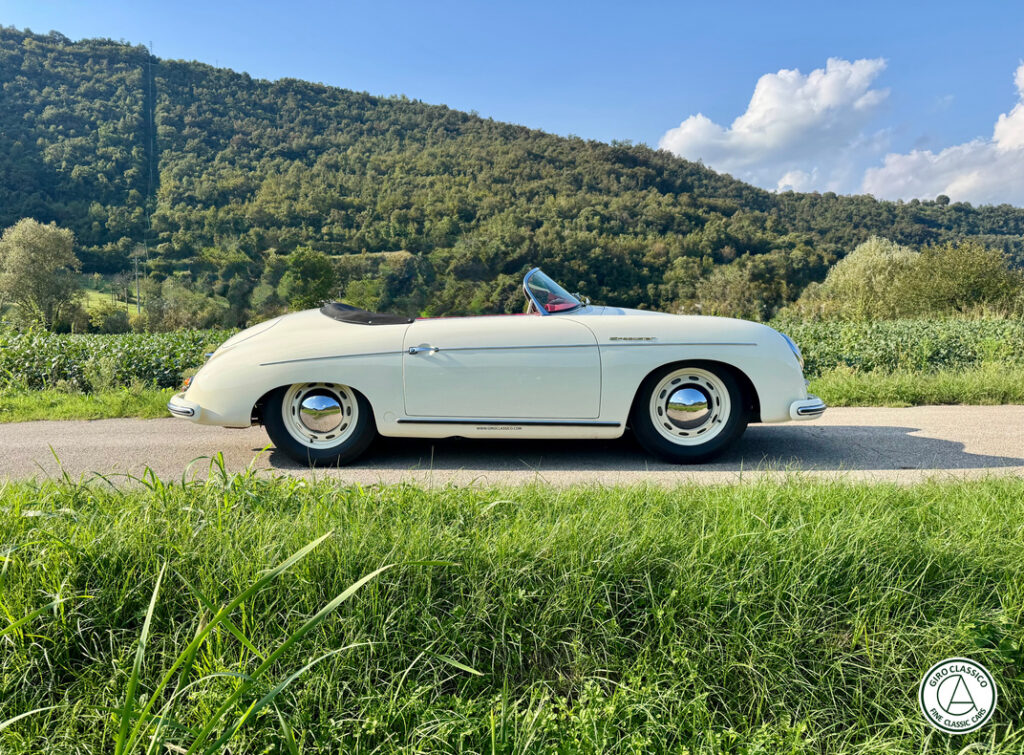
- distinctive European styling
- compact dimensions
- mechanical reliability
- relatively low fuel consumption
- agile and engaging performance
The car’s participation in SCCA racing further strengthened its sporting image. As a result, the 1955 Porsche 356 can be considered Porsche’s true entry ticket into the North American market.
This strategic step would later prove essential to the brand’s global success.
Engineering Philosophy and Driving Experience
From a dynamic point of view, the 1955 Porsche 356 retained Porsche’s characteristic layout: an air-cooled rear-mounted boxer engine.
This configuration provided a low centre of gravity and excellent traction when accelerating out of corners. Although the rear-engine weight distribution required a thoughtful driving style, the car was surprisingly balanced.
Its low weight contributed to quick turn-in, efficient braking and an involving driving experience that remained approachable rather than intimidating.
Another major advantage was mechanical simplicity. The absence of complex systems made maintenance easier, while the widespread popularity of the model helped ensure strong parts availability over time.
For collectors and enthusiasts today, this makes the Porsche 356 not only beautiful, but also genuinely usable.
Why the 1955 Porsche 356 Is Still Easy to Enjoy Today
Unlike many sports cars from the same period, the 1955 Porsche 356 remains relatively easy to drive in modern conditions.
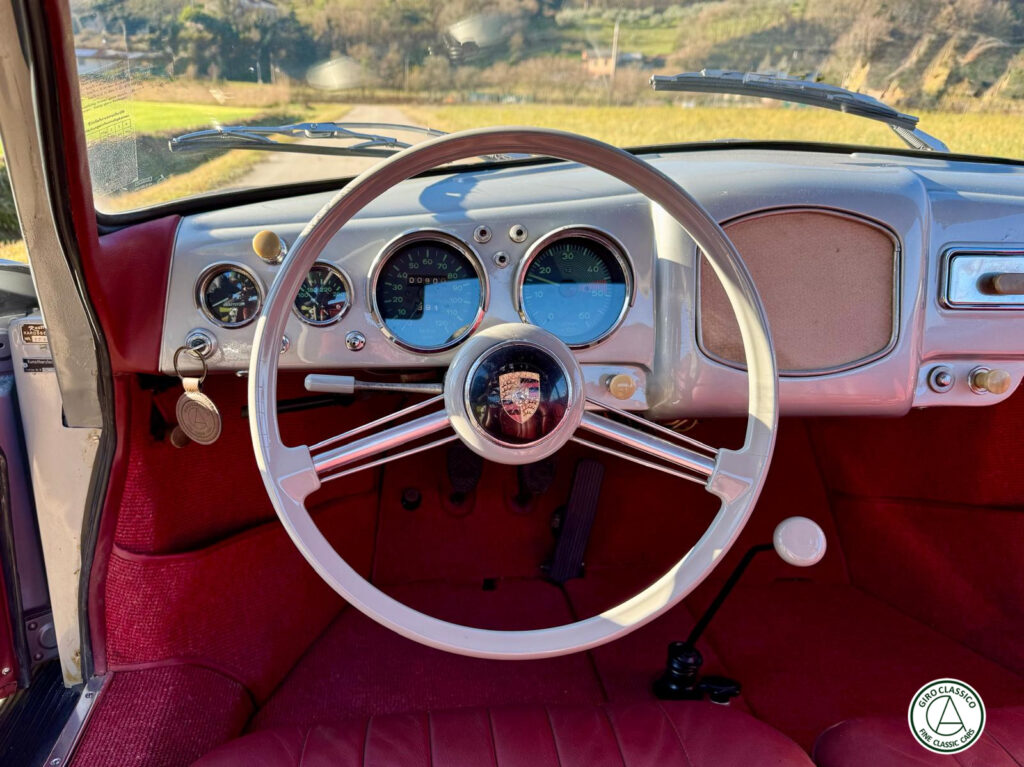
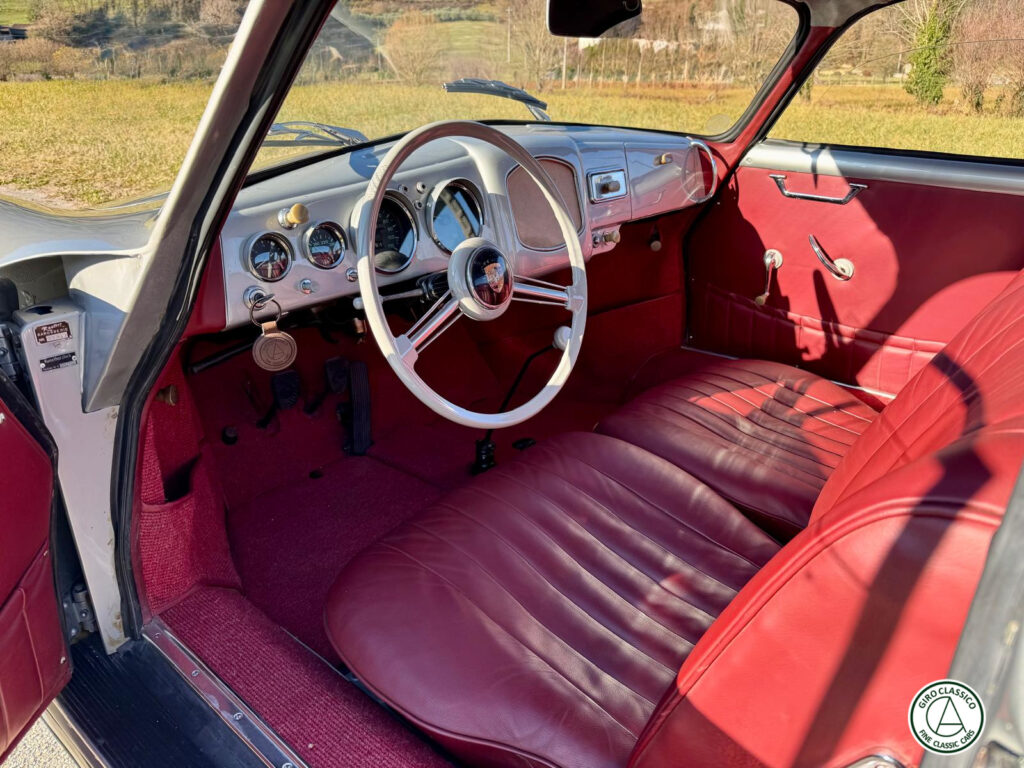

Its compact size makes it manageable in traffic, visibility is excellent, and the controls are light and intuitive. When properly maintained, the air-cooled boxer engine delivers smooth, reliable and enjoyable performance.
This is one of the reasons why the Porsche 356 continues to attract collectors who want more than a static display piece. It is a classic car that can still be driven, enjoyed and experienced on the road.
Eligibility for Historic Events
Another important strength of the 1955 Porsche 356 is its potential eligibility for major historic motoring events.
Thanks to its year of production and historical importance, many examples may be eligible for prestigious classic car events, depending on their specification, history and documentation.
These may include:

- Mille Miglia Storica, depending on the individual car
- official Porsche gatherings
- international concours d’elegance
- historic regularity rallies
- classic car tours and driving events
For this reason, the 1955 Porsche 356 offers much more than driving pleasure. It opens the door to some of the most desirable experiences in the classic car world.
Conclusion: The Porsche 356 That Helped Build a Global Brand
The 1955 Porsche 356 represents the meeting point between technical evolution, commercial success and sporting identity.
After seven years of continuous development, the model reached an ideal balance of performance, reliability, usability and charm. Through its growing success in the United States, Porsche strengthened its presence in the North American market and laid the foundations for the global prestige it would achieve in the following decades.
Even today, its easy driving nature, relatively simple maintenance and access to major historic events make the 1955 Porsche 356 one of the most intelligent and fascinating choices in the classic car market.
It is not simply a German classic sports car. It is the car that helped transform Porsche from an emerging manufacturer into an international icon.
The metallic grey 1500 example shown in the final images is available in our inventory.

